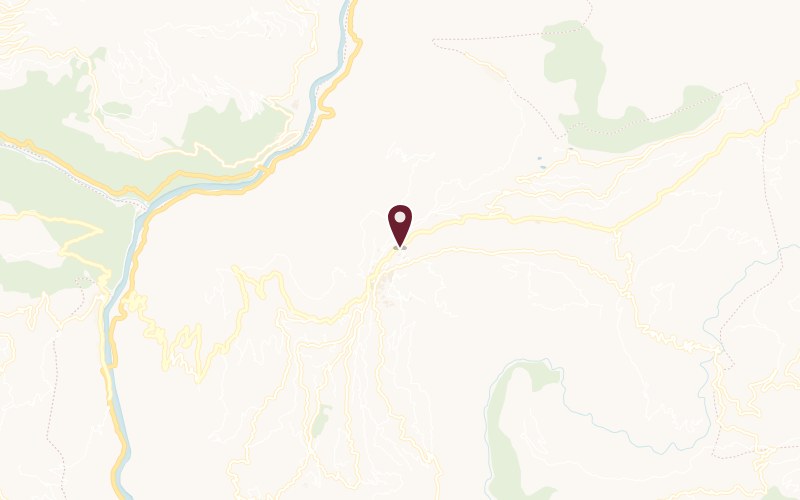
Tongsa Gompa (Bhutanese Gompa)
Kalimpong, India · c. 1958 – 1963
27.07350°N, 88.47600°E
Key Facts
- ◆ Sangharakshita visited after hearing that an incarnate lama was staying at the gompa.
- ◆ He found Dilgo Khyentse Rimpoche living not in the gompa itself but in a small cottage just inside the compound gate, to the right of the path.
- ◆ Khyentse Rimpoche was one of five tulkus of the great Jamyang Khyentse Wangpo and one of the leading figures of the Rimé ('non-sectarian') movement.
- ◆ Despite his extraordinary eminence, the Rimpoche was exceptionally approachable and unassuming.
- ◆ Sangharakshita visited him regularly, accompanied sometimes by Prajnaloka and sometimes by Lobsang Norbu.
- ◆ On 9 May 1963, the Rimpoche transmitted the phowa (consciousness transference) of Amitābha — an oral tradition of the Nyingmapas, never committed to writing.
- ◆ The cottage where the initiations happened still stands beside the gompa.
“One day I heard that an incarnate lama was staying at the Bhutanese Gompa. I do not remember if his name was mentioned to me at the time, though even had it been mentioned it would then have meant very little to me. Since the newcomer was an incarnate lama, it was not long before I went to see him, taking Prajnaloka with me as my interpreter.”
The lama was Dilgo Khyentse Rimpoche, living in a small cottage just inside the compound gate. Despite wearing the maroon robe, he had the long hair that betokened a lay tantric yogi. He was exceptionally tall — even seated cross-legged on his bed, his grey head bent over the Tibetan xylograph volume in his lap.
“I always found the Rimpoche sitting cross-legged on his bed, a Tibetan xylograph volume in his lap. On my entering the tiny front room, he always looked up from his book with a little smile of recognition and pleasure, and his wife always came in after a few minutes with the Tibetan tea and, perhaps, some Tibetan bread.”
The Rimpoche gave Sangharakshita the impression that his attention passed seamlessly from one thing to another — equally interested, equally undisturbed, whether reading his book, answering a question, or drinking tea.
On 9 May 1963, Khyentse Rimpoche transmitted the phowa or consciousness-transference of Amitābha — the simplest and most accessible of all the phowa practices, belonging to the Anuttarayoga Tantra. He later told Sangharakshita that through the initiations he had given him, he had transmitted the essence of the teachings of all the great masters depicted in the thangka he presented — and that Sangharakshita was now his spiritual heir and successor.
— In the Sign of the Golden Wheel
Source: In the Sign of the Golden Wheel
Other sites in Kalimpong
Contribute
Help keep this resource accurate and alive. You can leave a comment, suggest a correction, or submit a photo taken on your pilgrimage. All contributions are reviewed before publishing.
PUBLIC_WEB3FORMS_KEY in your environment variables.