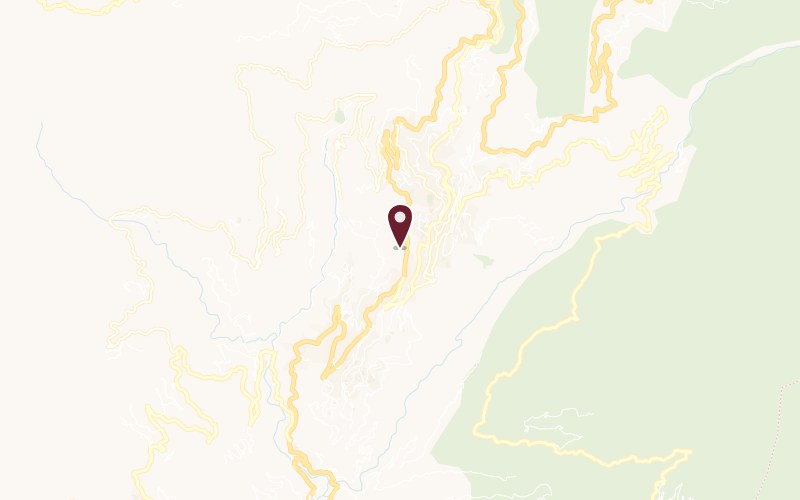
Tsuglakhang Monastery (Former Royal Temple)
Gangtok, Sikkim, India · c. 1956 – 1963
27.32640°N, 88.60680°E
Key Facts
- ◆ Sangharakshita lectured here frequently at the invitation of the Maharaj Kumar (Crown Prince) of Sikkim and Apa Sahib Pant, the Government of India's Political Officer in Sikkim.
- ◆ Jamyang Khyentse Rimpoche — one of the five tulkus of the great Jamyang Khyentse Wangpo — stayed and died here in 1959, aged sixty-seven.
- ◆ At their final meetings here, the Rimpoche gave Sangharakshita a thangka of Mañjughoṣa, Avalokiteśvara, Vajrapāṇi and Green Tārā.
- ◆ The Rimpoche explained that through the initiations he had given Sangharakshita, he had transmitted the essence of the teachings of all the great masters depicted — and that Sangharakshita was now his spiritual heir and successor.
- ◆ Both yellow-robed figures shown meditating and teaching in snowy mountain caves in the thangka represented Sangharakshita himself, as the Rimpoche pointed out smiling.
“My next two meetings with Khyentse Rimpoche both took place in Gangtok, which I visited from time to time and where I frequently lectured on the Dharma, sometimes at the invitation of the Maharaj Kumar of Sikkim and sometimes at the invitation of Apa Sahib Pant, the Government of India’s Political Officer in Sikkim. Both meetings took place, moreover, at the white-walled, yellow-roofed palace Lhakhang or temple, where the Rimpoche was then staying and where he died in 1959, aged sixty-seven.”
At their last meeting, after Sangharakshita had received the four sadhanas from Jamyang Khyentse in Darjeeling, the Rimpoche gave him a thangka resplendent with traditional Chinese brocade borders. The central figure was a saffron-coloured Mañjughoṣa holding a flaming sword of insight and the stem of a white lotus on which rested a sacred book. He was flanked by Avalokiteśvara and Vajrapāṇi in his wrathful form; below was Green Tārā, and above, in three tiers, a couple of dozen human teachers.
“Moreover, there was a special significance in his giving me the thangka. As he proceeded to explain, through the initiations he had given me he had transmitted to me the essence of the teachings of the great masters who were depicted in it. I was now their spiritual heir and successor. Smiling, he then pointed to the yellow-robed figures in their caves, one meditating and one teaching. Both were me.”
— In the Sign of the Golden Wheel
Source: In the Sign of the Golden Wheel
Contribute
Help keep this resource accurate and alive. You can leave a comment, suggest a correction, or submit a photo taken on your pilgrimage. All contributions are reviewed before publishing.
PUBLIC_WEB3FORMS_KEY in your environment variables.